BYD Dolphin: Monthly Running Costs in South Africa
By EV Cost Calculator Team · Published · Last updated
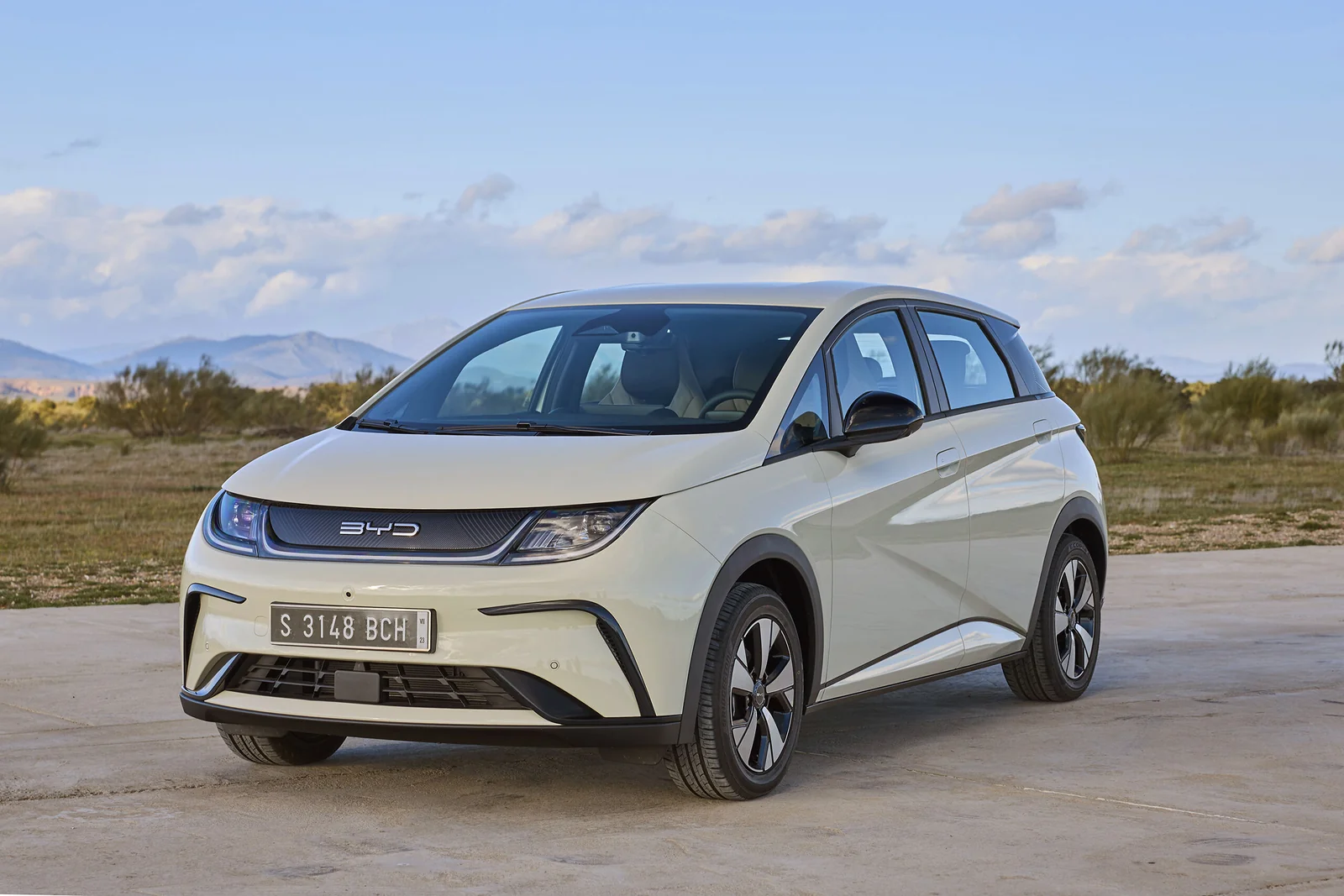
What Does It Cost to Run a BYD Dolphin in South Africa Monthly?
The BYD Dolphin Surf costs between R300 and R600 per month to run on electricity-roughly R2,000 less than a comparable petrol hatchback. At current fuel prices above R25 per litre, that gap adds up to nearly R30,000 in annual savings.
This breakdown covers exactly what you'll pay for home and public charging across South African provinces, how the Dolphin compares to petrol alternatives on a per-kilometre basis, and what maintenance costs look like without an engine to service.
How much does it cost to charge a BYD Dolphin monthly in South Africa
The BYD Dolphin Surf costs between R300 and R600 per month to charge at home, depending on your driving distance and provincial electricity tariff. Compared to a petrol hatchback like the Volkswagen Polo, that's roughly R2,000 less each month. For EVs, running costs come down almost entirely to electricity-there's no fuel bill and far fewer mechanical parts that wear out.
Three factors determine your actual monthly charging cost: how many kilometres you cover, your electricity rate in R/kWh, and whether you charge at home or use public stations. The numbers below use real South African tariffs and the Dolphin's actual energy consumption.
Monthly charging cost for 1,500km
Light urban commuting at 1,500km per month means the Dolphin Surf Dynamic uses approximately 195 kWh of electricity. The calculation is straightforward: 1,500km divided by 100, multiplied by 13 kWh/100km (the Dynamic's efficiency rating). At an average home tariff of R3.00/kWh, that works out to around R585 monthly.
The Comfort variant runs slightly more efficiently, so your costs may come in lower. Either way, you're paying roughly 70% less than a petrol equivalent covering the same distance.
Monthly charging cost for 2,000km
For the average South African commuter driving 2,000km monthly, the Dolphin Surf Dynamic consumes about 260 kWh. At R3.00/kWh, that's approximately R780 per month when charging at home.
You can run this calculation yourself: take your monthly kilometres, divide by 100, multiply by 13 kWh/100km, then multiply by your electricity tariff. Your utility bill lists the exact R/kWh rate you pay.
Monthly charging cost for 2,500km
Higher-mileage drivers covering 2,500km monthly use around 325 kWh, costing approximately R975 at home rates. Even at this distance, you're spending under R1,000 on energy-a fraction of what petrol would cost at current prices above R25 per litre.
| Monthly distance | Energy used (Dynamic) | Home charging cost | Public charging cost |
|---|---|---|---|
| 1,500km | 195 kWh | ~R585 | ~R1,460 |
| 2,000km | 260 kWh | ~R780 | ~R1,950 |
| 2,500km | 325 kWh | ~R975 | ~R2,440 |
Based on R3.00/kWh home tariff and R7.50/kWh public charging
Home charging costs for the Dolphin electric car
Most Dolphin owners plug in overnight at home, which is both the cheapest and most convenient approach. You arrive home, connect the charger, and wake up to a full battery. Home charging draws from your municipal or Eskom electricity supply, and tariffs vary by province.
Gauteng electricity tariffs
Gauteng municipalities typically charge between R2.80 and R3.50 per kWh. City of Johannesburg, City of Tshwane, and Ekurhuleni each set their own rates. Your utility bill lists the exact figure-look for "energy charge" expressed in R/kWh.
Western Cape electricity tariffs
City of Cape Town rates currently sit around R3.20 to R3.80 per kWh for residential customers. Some areas offer time-of-use tariffs where off-peak charging overnight costs less than daytime rates.
KwaZulu-Natal electricity tariffs
eThekwini Municipality charges approximately R3.00 to R3.40 per kWh. Surrounding areas on direct Eskom supply may see slightly different rates, so confirming your specific tariff is worthwhile.
Eastern Cape and other provinces
Provincial tariffs generally fall between R2.50 and R3.50 per kWh across South Africa. Rural areas on direct Eskom supply often pay less than municipal customers.
Several factors affect what you actually pay:
- Tariff type: Prepaid meters sometimes carry different rates than conventional billing
- Time of use: Off-peak charging (usually 10pm to 6am) can reduce costs by 20-30% where available
- Charger type: A standard wall socket works but charges slowly; a dedicated wallbox is faster and more efficient
Public charging costs for the BYD Dolphin in South Africa
Public charging becomes relevant on road trips or if home charging isn't available. The cost runs higher than home charging-typically R7.00 to R8.50 per kWh-but still works out cheaper than petrol per kilometre.
Two types of public charging exist. DC fast charging (direct current) tops up your battery quickly, usually from 30% to 80% in about 30 minutes on the Dolphin. AC charging (alternating current) is slower but costs less, making it suitable for longer stops at shopping centres or restaurants.
GridCars charging rates
GridCars operates South Africa's largest independent charging network with stations across the country. Rates typically range from R7.00 to R8.00 per kWh for DC fast charging, with some variation by location.
BMW ChargeNow and Audi Charge rates
Both networks are open to all EV drivers, not just BMW or Audi owners. Expect rates around R7.50 to R8.50 per kWh. Some offer subscription models that reduce per-kWh costs for frequent users.
Other charging networks
Mercedes me Charge and smaller operators fill gaps in coverage. Free charging is also available at some shopping centres and dealerships-useful for topping up while running errands.
The cost difference between charger types is significant:
- AC charging (slower): R4.00 to R6.00 per kWh, suitable for 2-4 hour stops
- DC fast charging: R7.00 to R8.50 per kWh, ideal for quick 30-minute top-ups
Tip: The EV Charging Station Map shows stations near you and lets you filter by network before heading out.
BYD Dolphin cost per kilometre vs petrol vehicles
Comparing cost per kilometre makes the Dolphin's value concrete. The difference is substantial, even when accounting for higher electricity prices at public chargers.
BYD Dolphin running cost per kilometre
The Dolphin Surf Dynamic costs approximately R0.39 per kilometre using home charging. That calculation: 13 kWh/100km multiplied by R3.00/kWh, divided by 100. With public charging at R7.50/kWh, the cost rises to around R0.98 per kilometre.
Volkswagen Polo running cost per kilometre
A Volkswagen Polo 1.0 TSI averaging 6.5 litres/100km costs approximately R1.63 per kilometre at current fuel prices around R25 per litre. That's more than four times the Dolphin's home charging cost per kilometre.
Monthly savings when switching to electric
At 2,000km per month, the Dolphin costs R780 for electricity versus R3,260 for petrol in a Polo-a difference of roughly R2,480 monthly. Over a year, that adds up to nearly R30,000 in fuel savings alone.
| Vehicle | Energy/fuel cost per km | Monthly cost (2,000km) |
|---|---|---|
| BYD Dolphin Surf (home) | R0.39 | R780 |
| BYD Dolphin Surf (public) | R0.98 | R1,950 |
| VW Polo 1.0 TSI | R1.63 | R3,260 |
BYD Dolphin Surf range and battery size
Range determines how often you'll charge and whether the Dolphin fits your daily driving patterns. Both variants offer enough range for typical South African commutes with room to spare.
Dolphin Surf Comfort battery and range
The entry-level Comfort comes with a 30.8 kWh battery delivering approximately 232km of WLTP range. Real-world range typically falls 10-15% lower than the official figure, so expect around 200km in mixed driving conditions.
Dolphin Surf Dynamic battery and range
The Dynamic's larger 38.8 kWh battery extends range to approximately 295km WLTP, or roughly 250-260km in everyday driving. The extra range costs more upfront but means fewer charging stops on longer trips.
Several factors affect how far you'll actually travel on a full charge:
- Driving style: Smooth acceleration preserves range; aggressive driving reduces it noticeably
- Climate control: Air conditioning and heating draw 1-3 kWh per hour from the battery
- Speed: Highway driving at 120km/h uses more energy than urban speeds
- Terrain: Hilly routes consume more energy, though regenerative braking recovers some on descents
BYD Dolphin Surf price in South Africa
Purchase price affects total cost of ownership, though the Dolphin's low running costs help offset the initial investment over time.
- Dolphin Surf Comfort: R339,900 with 30.8 kWh battery and 70 kW motor
- Dolphin Surf Dynamic: R389,900 with 38.8 kWh battery and 55 kW motor
Both variants include BYD's warranty and service plan, which covers scheduled maintenance for a set period. That coverage reduces out-of-pocket running costs during the warranty term.
Service and maintenance costs for the BYD Dolphin
EVs have dramatically lower maintenance costs than petrol vehicles because they contain fewer moving parts and no combustion engine. The Dolphin doesn't require oil changes, spark plugs, timing belts, or exhaust repairs-ever.
BYD includes a service plan covering routine maintenance. The items you will pay for over time are limited:
- Brake fluid replacement: Every 2-3 years
- Cabin air filter: Annual replacement
- Tyre rotation and replacement: Similar to any vehicle
- Wiper blades: As needed
Regenerative braking also extends brake pad life significantly. When you lift off the accelerator, the motor slows the car and recovers energy to the battery. Because the friction brakes do less work, pads often last 2-3 times longer than on petrol cars.
Calculate your exact BYD Dolphin running costs
Your actual costs depend on your specific province, electricity tariff, and driving patterns. Rather than relying on averages, you can calculate precisely what you'd pay based on your own inputs.
The EV Charging Costs Calculator lets you select the BYD Dolphin, choose your province, and enter your exact electricity rate. You can then see charging costs for any scenario-from a quick 20% to 80% top-up to a full charge.
If you're comparing the Dolphin to your current petrol vehicle, the Fuel vs EV Comparison Calculator shows your potential monthly savings based on your actual fuel spend and driving distance.
FAQs about BYD Dolphin running costs in South Africa
How much does it cost to fully charge a BYD Dolphin from empty to full?
A full charge on the Dolphin Surf Comfort (30.8 kWh) costs approximately R92 at home rates of R3.00/kWh. The Dynamic (38.8 kWh) costs around R116 for a full charge. Public charging roughly doubles both figures.
How much electricity does the BYD Dolphin use per 100km?
The Dolphin Surf consumes approximately 12-14 kWh per 100km depending on the variant and driving conditions. The Comfort is slightly more efficient due to its smaller motor and lighter weight.
Is the BYD Dolphin the cheapest electric car to run in South Africa?
The Dolphin Surf combines South Africa's lowest EV purchase price with efficient energy consumption. On a per-kilometre basis, it ranks among the most affordable electric vehicles to operate in the local market.
Can I charge a BYD Dolphin at home using a standard wall socket?
Yes, the Dolphin can charge from a standard 15A three-pin socket. A full charge takes 10-15 hours this way. Most owners find overnight charging sufficient, while a dedicated wallbox reduces charging time to 4-6 hours.
How long does it take to charge a BYD Dolphin at home overnight?
With a standard socket, expect 10-15 hours for a full charge. A 7 kW wallbox reduces this to 4-6 hours. DC fast charging at public stations achieves 30% to 80% in approximately 30 minutes.