Eskom Wants R670 a Month Before You Switch Anything On
By EV Cost Calculator Team · Published · Last updated
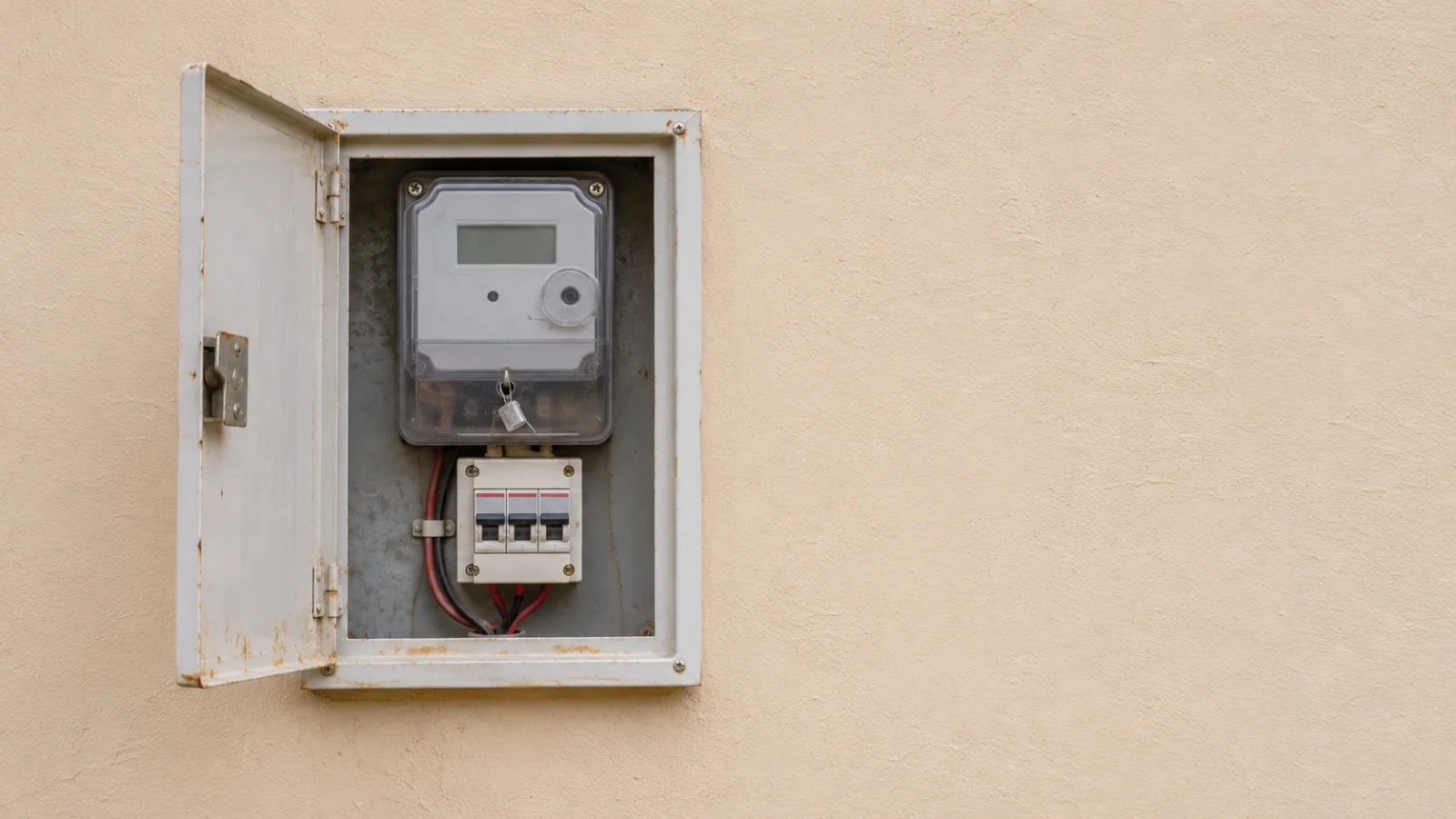
Eskom wants to charge Homepower 4 households R22.03 a day before they use a single unit of electricity, up from R17.86. That is about R670 a month in fixed charges alone, a 23.3 percent increase. NERSA is scheduled to decide on 26 November 2026.
The headline number everyone is quoting is 8.83 percent. That is the average increase. It is not what most households will actually experience, because Eskom is not spreading it evenly. It is loading it onto the part of your bill you cannot avoid.
What is actually being proposed
Eskom filed its 2027/28 tariff application on 31 July 2026. The average increase is 8.83 percent for customers Eskom bills directly and 8.84 percent for municipalities, per MyBroadband's analysis of the application.
The restructuring is the real story. Eskom is in the final year of a three-year plan to move more of its revenue into fixed charges. Those charges currently sit at about two thirds of their target level and reach 100 percent in 2027/28.
| Tariff | Fixed charge now, per day | Proposed, per day | Increase | Roughly per month |
|---|---|---|---|---|
| Homepower and Homeflex 1 | R23.02 | R27.65 | 20.1 percent | About R841 |
| Homepower and Homeflex 2 | R42.68 | R49.05 | 14.9 percent | About R1,492 |
| Homepower and Homeflex 3 | R84.33 | R94.38 | 11.9 percent | About R2,871 |
| Homepower and Homeflex 4 | R17.86 | R22.03 | 23.3 percent | About R670 |
Figures from NERSA's consultation paper as analysed by MyBroadband. Monthly figures use a 30.4 day average month, so a 30 day month gives slightly lower numbers.
To keep the overall average at 8.83 percent while fixed charges rise this steeply, Eskom lowers the per-unit energy rate. That is the mechanism worth understanding.
Who wins and who loses
If your fixed charge rises 23 percent and your per-unit rate falls, then whether you are better or worse off depends entirely on how much electricity you use.
A household that uses a lot of grid electricity spreads the fixed charge across many units and benefits from the cheaper rate. A household that uses very little, because it is frugal, because it is small, or because it has solar, pays a much larger fixed charge and gets almost nothing back from the lower energy rate.
This is not an accident. It is what a Generation Capacity Charge is designed to do. Eskom's position is that a grid connection has a cost whether you draw power through it or not. The consequence is that low-consumption households carry a disproportionate share of the increase.
You can work out where you land by running your own monthly consumption through our EV charging cost calculator.
This has been happening for three years
The 2027 proposal is the last step of a shift that started in 2025 and has already moved a lot of money.
- From 1 April 2025, Eskom moved 20 percent of generation capacity cost and a third of service and administration cost into fixed charges. The Homepower 4 fixed component rose 54.6 percent, from R6.43 to R9.94 a day, per MyBroadband.
- From 1 April 2026, the fixed portion of the Generation Capacity Charge rose to 30 percent. Combined Homeflex 4 fixed fees rose 28 percent over the year, from R417.00 to R535.80 a month, per MyBroadband.
- From 1 April 2027, if approved, fixed charges reach their full target level.
Across those three steps, a Homepower 4 household's unavoidable monthly charge moves from under R200 to about R670.
How we got to 8.83 percent
This number has a complicated history that is worth knowing, because it is still being contested in court.
NERSA originally approved 6.19 percent for 2027/28 in January 2025. Eskom then identified an error of R54 billion in how its regulatory asset base had been valued. NERSA and Eskom settled, and the NERSA and Eskom settlement of 27 August 2025 raised the 2027/28 figure by 2.64 percentage points to 8.83 percent.
Business Day reported that the Pretoria High Court rejected that settlement in December 2025 and sent it back to NERSA. NERSA redetermined in February 2026 and arrived at the same answer, per Engineering News.
It is not over. Moneyweb reported that AfriForum has gone back to court seeking to set the redetermination aside and force a fresh public process. AfriForum's alternative proposal is that fixed fees should rise only by the 8.84 percent average rather than by up to 23.3 percent.
Bona reported substantial public opposition at the hearings, including from civic organisations, a city government and opposition parties.
The dates that matter
| Date | What happens |
|---|---|
| 2 October 2026 | Written comments closed |
| 8 October 2026 | Public hearing held |
| 26 November 2026 | Energy Regulator decision due |
| 3 December 2026 | Notice to Eskom |
| 1 April 2027 | New prices for Eskom direct customers |
| 1 July 2027 | New prices for municipal customers |
If you buy electricity from your municipality rather than from Eskom, you have until July 2027 before this reaches your bill, and your municipality decides how to pass it through.
What municipal customers pay now
For context, NERSA approved a 9.01 percent increase in Eskom's bulk tariff to municipalities for 2026/27, along with 176 municipal applications, per EWN and Sowetan.
| Municipality | 2026/27 approved increase |
|---|---|
| Cape Town | 7.5 percent |
| Johannesburg (City Power) | 8.63 percent |
| Tshwane | 8.8 percent |
| eThekwini | 9 percent |
| Nelson Mandela Bay | 10.09 percent |
| Ekurhuleni | 12.7 percent |
| Buffalo City | 14 percent |
At unit level, MyBroadband reports eThekwini's flat residential rate rose 10.5 percent to R4.17 per kWh, and City Power's Block 2 rate, above 600 kWh, rose 6.16 percent to R4.69 per kWh.
What this means if you charge an electric car
Counterintuitively, a fixed-charge-heavy tariff is good for EV owners.
If you are already paying R670 a month whether you use electricity or not, every additional unit you draw costs only the energy rate, which is going down. Charging a car at home adds units without adding fixed cost, which spreads that R670 across more kWh and lowers your effective cost per unit.
The household that loses under this structure is the one that uses almost no grid electricity. The household that gains is the one with a heat pump, a pool and an electric car. Run your own numbers with our EV versus petrol running cost calculator.
What to do before April
Nothing drastic, but two things are worth doing.
Find out which tariff you are actually on. Homepower and Homeflex share the same fixed charges, but Homeflex energy rates are time of use while Homepower is flat. If you can shift load to off-peak, Homeflex may be worth asking about.
Work out your real cost per unit including fixed charges, not just the rate printed on your bill. For many low-usage households that number is already far higher than they think, and it is about to go higher.
Frequently asked questions
How much will Eskom electricity cost in 2027?
The average proposed increase is 8.83 percent for Eskom direct customers from 1 April 2027, and 8.84 percent for municipalities from 1 July 2027. Fixed charges rise much more, with Homepower 4 proposed to go from R17.86 to R22.03 a day, an increase of 23.3 percent.
What is Eskom's fixed charge for 2027?
The proposal is R22.03 a day for Homepower and Homeflex 4, which is roughly R670 a month before any electricity is used. Tier 1 is R27.65 a day, Tier 2 is R49.05 and Tier 3 is R94.38.
When does NERSA decide on the Eskom tariff?
The Energy Regulator decision is scheduled for 26 November 2026, with notice to Eskom on 3 December. New prices would apply from 1 April 2027 for Eskom direct customers.
Why are fixed charges rising more than the average?
Eskom is in the final year of a three-year plan to move revenue from per-unit energy charges into fixed charges. To keep the overall average at 8.83 percent, the per-unit rate falls while the fixed charge rises, which shifts cost onto low-consumption households.
Is the 8.83 percent increase final?
The revenue decision has been redetermined by NERSA, but AfriForum has gone back to court seeking to set it aside and force a fresh public process. The structure of how that revenue is collected was still before NERSA at the time of writing.