Fuel Surges 1 April: Time to Switch to an Electric Car?
By EV Cost Calculator Team · Published · Last updated
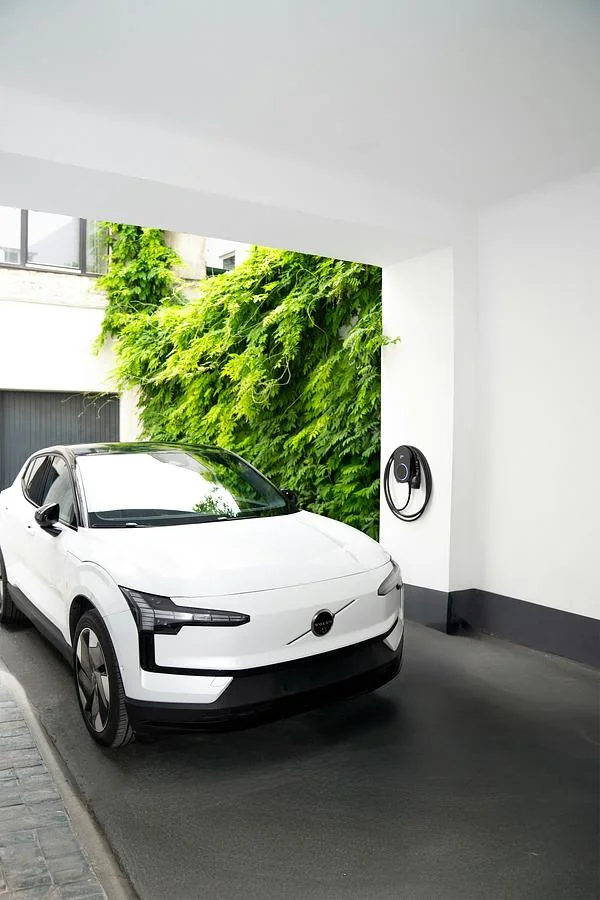
SA Bracing for Major Petrol and Diesel Price Hike in April 2026: Is It Time to Switch to Electric Vehicles
South African motorists could be paying R3.87 more per litre for petrol and up to R6.75 more for diesel from 1 April 2026. For a driver filling up weekly, that's an extra R9,300 per year in fuel costs alone.
The timing has pushed many to reconsider electric vehicles seriously. This guide breaks down the expected price increases, compares EV running costs to petrol vehicles using South African electricity tariffs, and helps you calculate whether switching makes financial sense for your specific situation.
How much will petrol and diesel prices increase in April
South African motorists face fuel price increases of up to R3.87 per litre for petrol and R6.75 per litre for diesel in April 2026. The Central Energy Fund's latest data points to accumulated under-recoveries, rand weakness, and elevated global oil prices as the primary drivers. EVs offer lower running costs and protection from weekly fuel price swings, though the higher purchase price means the switch works best as a long-term financial decision rather than a quick fix.
Here's what the projections look like for 1 April 2026:
| Fuel Type | Current Price (March 2026) | Expected April Price | Increase |
|---|---|---|---|
| Petrol 93 | R21.45/litre | R25.32/litre | +R3.87 |
| Petrol 95 | R21.85/litre | R25.72/litre | +R3.87 |
| Diesel 50ppm | R19.89/litre | R26.64/litre | +R6.75 |
| Diesel 500ppm | R19.69/litre | R26.34/litre | +R6.65 |
Petrol 93 and 95 expected price per litre
Both petrol grades face an increase of roughly R3.87 per litre. The octane rating tells you how well the fuel resists premature ignition in the engine. Most vehicles run fine on 93, while high-performance engines typically require 95.
Inland prices run higher than coastal prices because of transport costs. Gauteng motorists can expect petrol 95 to push past R26 per litre once the April adjustment takes effect.
Diesel 50ppm and 500ppm expected price per litre
Diesel faces the steeper hit, with 50ppm projected to climb by R6.75 per litre. The "ppm" number refers to sulphur content. Lower is cleaner, and 50ppm is what most modern diesel vehicles use.
For bakkie owners and commercial fleets, the impact adds up fast. A single fill-up of a 70-litre tank will cost roughly R470 more than it did in March.
Why South African fuel prices are spiking
Three factors are converging to create this price shock. Understanding them helps explain why fuel costs remain so unpredictable from month to month.
Rand weakness against the US dollar
South Africa imports refined fuel priced in US dollars. When the rand weakens, it costs more in local currency to buy the same amount of fuel. The rand has been trading above R19 to the dollar recently, which adds significant pressure to pump prices before any other factors come into play.
Rising global oil prices
Ongoing conflicts in the Middle East have disrupted supply chains and pushed Brent crude prices higher. Even small movements in global oil markets translate directly into cents-per-litre changes at South African pumps, often within weeks.
Fuel levy and Road Accident Fund contributions
A substantial portion of every litre you buy goes to government levies rather than actual fuel costs. The breakdown looks like this:
- General Fuel Levy: Approximately R4.04 per litre
- Road Accident Fund Levy: Approximately R2.18 per litre
- Carbon Tax: Increasing to 19c/litre for petrol and 23c/litre for diesel in April
Because of these fixed levies, pump prices don't fall by the same amount even when global oil prices drop.
How rising fuel costs affect your monthly budget
That R3.87 per litre increase might seem manageable at first glance. But when you calculate the monthly impact, the numbers tell a different story.
A driver filling a 50-litre tank weekly will pay an extra R774 per month from this single price adjustment alone. Over a year, that's nearly R9,300 in additional fuel costs for the same driving habits.
For fleet owners, the numbers multiply quickly. A small business running five vehicles could see fuel costs increase by R46,000 annually, assuming similar usage patterns. Tracking your actual monthly fuel spend before comparing alternatives makes it easier to calculate potential savings accurately.
How EV running costs compare to petrol vehicles in South Africa
The running cost comparison focuses on what you pay per kilometre for energy. This is where EVs show their advantage most clearly, and it's the metric that matters most for day-to-day budgeting.
| Cost Factor | Petrol Vehicle | Electric Vehicle |
|---|---|---|
| Energy cost per km | R2.14 (at R25.72/litre, 12km/l) | R0.45 (at R3/kWh, 15kWh/100km) |
| Monthly cost (1,500km) | R3,210 | R675 |
| Annual cost (18,000km) | R38,520 | R8,100 |
Cost per kilometre for petrol vehicles
The formula is straightforward. Divide the fuel price by your vehicle's efficiency. At R25.72 per litre with a car averaging 12km per litre, you're paying R2.14 for every kilometre driven.
Older vehicles or those with larger engines often achieve worse efficiency, which pushes costs even higher. A bakkie averaging 8km per litre would cost R3.22 per kilometre at the same fuel price.
Cost per kilometre for electric vehicles
For EVs, multiply the electricity tariff by the vehicle's consumption rate. A typical EV uses around 15kWh per 100km, which works out to 0.15kWh per kilometre.
At R3 per kWh, a common home tariff in South Africa, that's R0.45 per kilometre. Compared to R2.14 for petrol, the EV costs roughly 79% less to run on a per-kilometre basis.
How provincial electricity tariffs change your EV costs
Electricity tariffs vary by province and municipality. Residential rates range from approximately R2.50 to R3.80 per kWh depending on where you live. Eskom's 2024/25 tariffs, approved by NERSA, form the baseline, though municipal surcharges can add to this.
The difference matters. At R2.50 per kWh, your cost per kilometre drops to R0.38. At R3.80 per kWh, it rises to R0.57. Either way, it's still substantially cheaper than petrol.
Calculate your province-specific EV running costs →
How long fuel savings take to pay off the EV price premium
EVs typically cost 25-40% more than equivalent petrol vehicles upfront. However, the monthly savings accumulate over time, and eventually you reach a break-even point where total ownership costs equalise.
The key variables that determine how quickly you reach break-even include:
- Monthly kilometres driven: Higher mileage means faster payback
- Fuel price trajectory: If petrol continues rising, break-even arrives sooner
- Electricity costs: Lower tariffs or solar charging accelerate savings
For a driver covering 1,500km monthly and saving R2,535 per month on fuel, a R100,000 price premium takes approximately 39 months to recover. High-mileage drivers or those with home solar can reach break-even considerably faster.
Why electric vehicles cost less to service and maintain
Beyond fuel savings, EVs have inherently lower maintenance requirements. This is another factor that improves long-term ownership economics and often gets overlooked in cost comparisons.
Fewer moving parts mean fewer repairs
A petrol engine contains hundreds of moving components. An electric motor has roughly 20. Fewer parts means fewer potential failures and lower repair bills over the vehicle's lifetime.
The simplicity also means less time spent at the workshop. Without a complex drivetrain, there's simply less that can go wrong.
No oil changes or exhaust system services
EV ownership eliminates several routine maintenance items entirely:
- Engine oil and filter changes
- Spark plug replacements
- Timing belt services
- Exhaust system and catalytic converter repairs
- Transmission fluid changes
Over five years, these savings can add up to thousands of rands, depending on your previous vehicle's service requirements.
Regenerative braking extends brake life
Regenerative braking uses the electric motor to slow the vehicle while recovering energy in the process. This reduces wear on traditional brake pads and discs significantly.
Many EV owners report brake components lasting twice as long as on petrol vehicles. The savings are modest compared to fuel, but they contribute to the overall cost advantage.
What electric vehicles are available in South Africa
The local EV market has expanded significantly over the past two years. Options now exist across multiple price points, from entry-level commuters to premium luxury models.
EVs priced under R600,000
The BYD Dolphin starts from approximately R340,000, offering around 400km of range on a full charge. This segment suits urban commuters and drivers with predictable daily routes who rarely exceed 100km in a day.
EVs priced between R600,000 and R1 million
The Volvo EX30 and BMW iX3 occupy this middle ground. Both provide improved range in the 450-500km bracket, faster charging capabilities, and more refined interiors compared to entry-level options.
Premium EVs priced above R1 million
The Mercedes-Benz EQA and BMW iX deliver extended range, rapid charging, and luxury features. These models often match or exceed their petrol counterparts in performance while offering the running cost benefits of electric power.
Is South Africa's charging infrastructure ready for daily use
Charging anxiety is a legitimate concern for anyone considering an EV. However, the reality is more practical than many assume, particularly for drivers who can charge at home.
Home charging with standard or dedicated outlets
Most EV owners charge overnight at home, which eliminates the need for frequent public charging stops. A standard 15A wall socket can add approximately 10-15km of range per hour. That's enough to restore a typical day's driving overnight.
A dedicated wallbox charger speeds this up considerably, adding 40-50km of range per hour. For most commuters, plugging in when you get home means waking up to a full battery every morning.
Public charging networks across South Africa
Several networks now operate across major routes and urban centres:
- GridCars: Extensive national coverage including highway corridors
- Audi Charge: Premium locations with fast-charging capability
- BMW ChargeNow: Integrated network accessible to all EV brands
The EV Cost Calculator includes a charging map to help you locate stations along your regular routes.
Find charging stations near you →
Calculate your personal savings with the EV Cost Calculator
Rather than relying on generic estimates, you can calculate savings based on your actual driving patterns and location. The EV Cost Calculator uses real-time South African fuel prices and official NERSA/Eskom provincial tariffs to give you localised results.
Here's how it works:
- Enter your current fuel spend, including cost per tank and monthly fill-ups
- Select an EV brand and model from the South African market
- Choose your province for accurate electricity tariffs
- View your estimated monthly and annual savings in rands
The calculator also shows charging times and range estimates for each vehicle, so you can plan around your actual driving needs.
Calculate your EV savings now →
Frequently asked questions about switching to an EV in South Africa
How does load shedding affect EV charging at home?
Charging pauses during power cuts and resumes automatically when electricity returns. Many owners schedule charging for overnight hours or use home solar with battery backup to reduce grid dependence. A full charge typically takes 8-10 hours on a standard outlet, so even with a few hours of load shedding, most drivers wake up to a usable battery.
Can I charge an electric vehicle using solar panels?
Yes. A home solar system with sufficient capacity can charge an EV during daylight hours, potentially reducing running costs to near zero. This also provides a buffer against both load shedding and electricity tariff increases. The typical home solar installation of 5-10kW can add meaningful range during peak sunlight hours.
What happens to EV battery performance after several years?
EV batteries experience gradual capacity loss, typically 1-2% per year under normal use. Most manufacturers warrant batteries for eight years or 160,000km. Degradation rarely affects daily usability within that period, and even a battery at 80% capacity still provides more than enough range for most commutes.
Are there government incentives for buying an EV in South Africa?
Direct consumer incentives remain limited in South Africa. However, reduced import duties on certain electric vehicles have helped lower purchase prices. Some corporate fleet programmes offer additional benefits, though individual buyers currently rely primarily on running cost savings to justify the switch.
How far can affordable electric vehicles travel on a single charge?
Entry-level EVs like the BYD Dolphin offer approximately 400km of real-world range. That's more than sufficient for most daily commutes and weekend trips without requiring a mid-journey charge. Real-world range varies based on driving style, climate control use, and terrain, but 300-350km is a reasonable expectation for conservative estimates.