Is Solar Still Worth It in South Africa Without Load Shedding?
By EV Cost Calculator Team · Published · Last updated
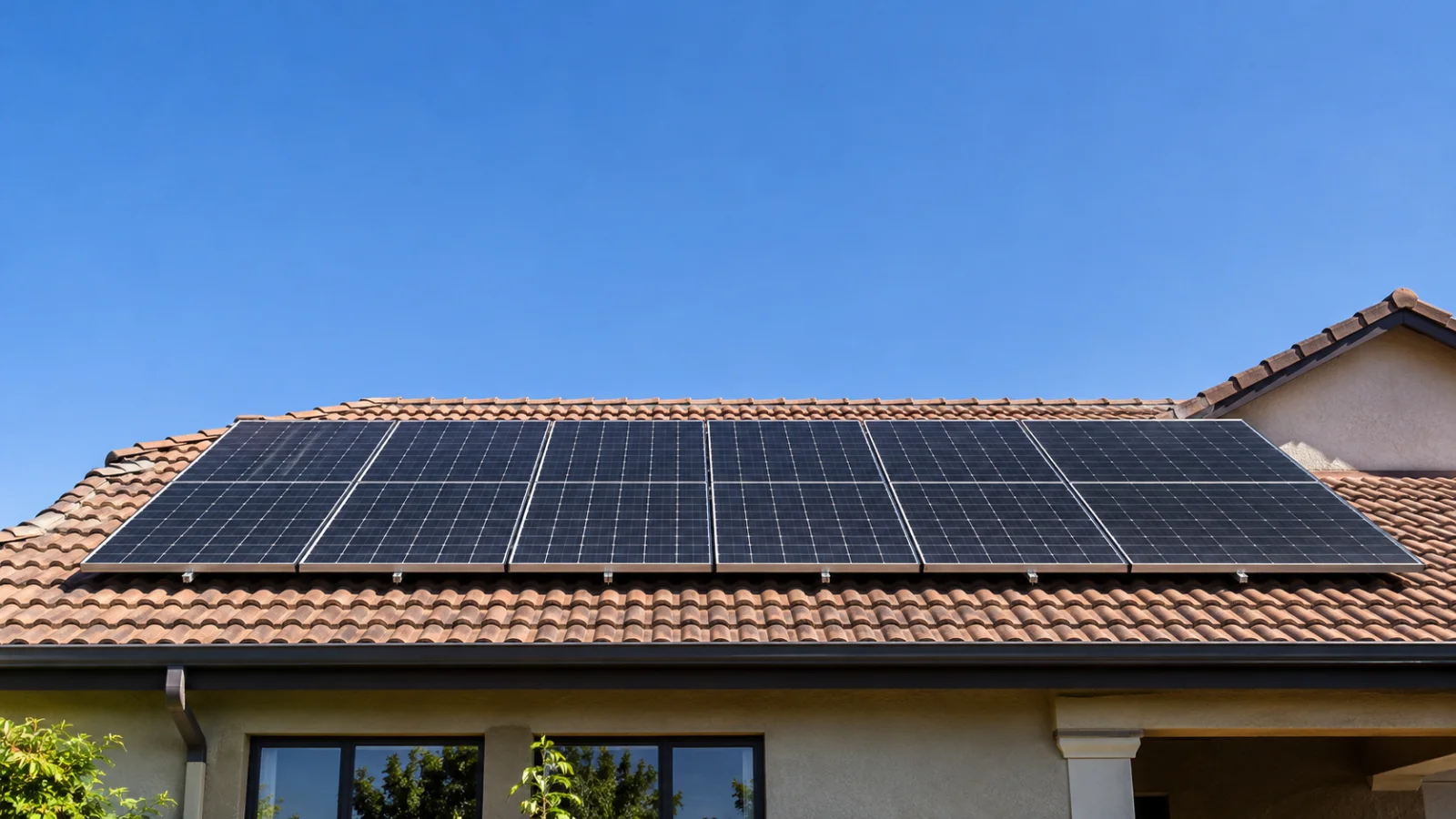
Load shedding has not happened since 16 May 2025. The reason to install solar in 2027 is no longer keeping the lights on. It is escaping a per-unit electricity rate that keeps climbing, and the maths has changed in ways that catch people out.
If you are weighing up solar now, three things have shifted since the boom years. Here they are, with the numbers.
The reason to buy has changed
South Africa has gone more than 500 consecutive days without load shedding, as Further Africa reported in October 2026. Eskom's energy availability factor has improved and its diesel spend has collapsed.
That removes the panic motive. It does not remove the financial one. Electricity tariffs have risen well above inflation for years, and Eskom's 2027/28 proposal would push fixed charges up by as much as 23.3 percent on some tariffs.
So the question is no longer "will solar keep my fridge running". It is "will solar save me money", and that is a calculation rather than a feeling.
What solar costs in late 2026
Here is the honest version: published prices vary a lot, and almost every source is an installer with something to sell.
| System | Quoted range | Source |
|---|---|---|
| 3 kW, no battery | R45,000 to R70,000 | SolarZA |
| 5 kW hybrid with 5 to 10 kWh battery | R80,000 to R120,000 | SolarZA |
| 5 kW with 10 kWh battery | R74,500 to R90,500 | EnergyBee kit pricing |
| 5 kW with 10 kWh battery | R135,000 to R165,000 | EnergyBee guide pricing |
| 8 kW with 10 kWh battery | R94,500 to R110,500 | EnergyBee kit pricing |
| 10 kW with 14 kWh battery | R137,000 to R161,000 | EnergyBee kit pricing |
| 10 kW | From R150,000 | SolarZA |
Ranges from SolarZA, EnergyBee's kit pages and EnergyBee's price guide.
Notice rows four and five. The same publisher gives two very different numbers for the same system. We are showing both rather than picking one, because the gap tells you something useful: a "5 kW with battery" quote can mean very different hardware. The cheaper figure usually means a smaller inverter, cheaper panels and a bare installation. The higher figure usually includes a better inverter, proper mounting and compliance work.
Component prices for sanity-checking a quote: EnergyBee puts panels at R2.50 to R5.00 a watt, or R1,350 to R2,700 each, and EnergyBee puts lithium batteries at R4,000 to R6,000 per usable kWh plus R5,000 to R15,000 for a retrofit installation.
If a quote is far below the component cost of its parts, something is being left out.
The payback calculation people get wrong
Installers typically quote payback periods of four to six years. EnergyBee claims about 4.2 years for a 5 kW kit and OurPower estimates about 5.5 years for 5 kVA in Johannesburg.
Those figures are vendor estimates, and they usually assume you avoid paying for every unit the system generates. Two things break that assumption.
Fixed charges do not go away. If Eskom's proposal is approved, a Homepower 4 household pays about R670 a month regardless of how little it draws. Solar reduces your energy charge. It does nothing to your fixed charge. A payback calculation that treats your entire bill as avoidable is wrong.
You generate when you are not home. Solar peaks at midday. Household demand peaks in the evening. Without a battery, a large part of your generation goes to waste or to the grid for little or no return. This is the single most common reason real payback is longer than quoted.
Work out your own number, using your actual bill and your actual consumption pattern, with our solar calculator.
The municipal penalties nobody mentions in the quote
This is where solar economics can turn upside down, and it is specific to where you live.
Johannesburg. City Power moves registered solar users onto postpaid tariffs. MyBroadband reports fixed fees of about R1,360 a month on a single-phase 80A connection against R230 on prepaid, which costs a typical user between R837 and R1,127 more a month. That is up to R13,500 a year, which can swallow a large share of the saving.
Emfuleni. MyBroadband reports the council approved in principle a R2,400 application fee plus a R463 monthly levy on residential solar, subject to public participation.
Penalties for not registering. MyBroadband reports fines of roughly R6,000 to R30,000 being cited for unregistered systems.
On Eskom's side, MyBroadband reported a free registration waiver that ran to 30 September 2026. Reports that it has since been extended could not be verified, so confirm directly with Eskom before relying on it.
The practical point: ask your municipality what tariff you will be moved to before you sign. A quote that does not account for a change of tariff is not a real quote.
Does solar still pay?
For most grid-connected households in a metro, yes, but with a longer payback than the brochures suggest and with a strong dependence on where you live.
The case is strongest if you use a lot of electricity during daylight hours, if you are on a tariff with low fixed charges, and if your municipality does not penalise registered systems. It is weakest if you are a low-consumption household in Johannesburg, where the forced tariff change can exceed the energy saving.
It is also worth noting what the fixed-charge shift implies. As more of your bill becomes unavoidable, partial solar becomes less attractive and full grid defection becomes more attractive. MyBroadband makes exactly this point. Going fully off grid is expensive and technically demanding, but the tariff structure is pushing in that direction.
Solar and an electric car
This combination is better than either on its own, for a simple reason. An EV is a large daytime-flexible load, and daytime is when solar generates.
If you can charge a car from your own panels during the day, you convert surplus generation that would otherwise be wasted into transport fuel that would otherwise cost R27 or more a litre. That is the single highest-value use of excess solar in a South African household.
Run the combination through our solar calculator and our EV charging cost calculator to see what it does to your own numbers.
The wider picture
South Africa is still installing solar at scale. BloombergNEF's 2026 South Africa Transition Factbook estimates the country imported 5.3 GW of solar and 0.92 GW of battery storage between the start of 2025 and April 2026, with China supplying 98 percent of solar imports. Ember projects 3.3 GW of installations in 2026.
But South Africa's share of African solar imports fell from 52 percent in 2023 to 20 percent by June 2026, which tells you the local rush has cooled even as the rest of the continent accelerates.
Frequently asked questions
Is solar still worth it in South Africa without load shedding?
For most grid-connected metro households, yes, but the payback is driven by tariff savings rather than backup power. The case is strongest for high daytime users and weakest for low-consumption households in municipalities that penalise registered solar.
How much does a 5 kW solar system cost in South Africa?
Published ranges run from R74,500 to R165,000 with a 10 kWh battery, depending on the source and the quality of the components. Panels cost R2.50 to R5.00 a watt and lithium batteries R4,000 to R6,000 per usable kWh.
What is the payback period on solar in South Africa?
Installers typically quote four to six years. Real payback is usually longer, because fixed charges on your bill do not reduce when you generate your own power, and without a battery much of your midday generation is not used.
Does Johannesburg charge extra for solar?
Effectively yes. City Power moves registered solar users onto postpaid tariffs with fixed fees of about R1,360 a month against R230 on prepaid, which has been reported as costing users between R837 and R1,127 more a month.
Do I have to register my solar panels?
Municipal rules require registration and fines of roughly R6,000 to R30,000 have been reported for unregistered systems. Eskom ran a free registration waiver to 30 September 2026. Confirm the current position with your own supplier before installing.