What Water Actually Costs in Johannesburg in 2026
By EV Cost Calculator Team · Published · Last updated
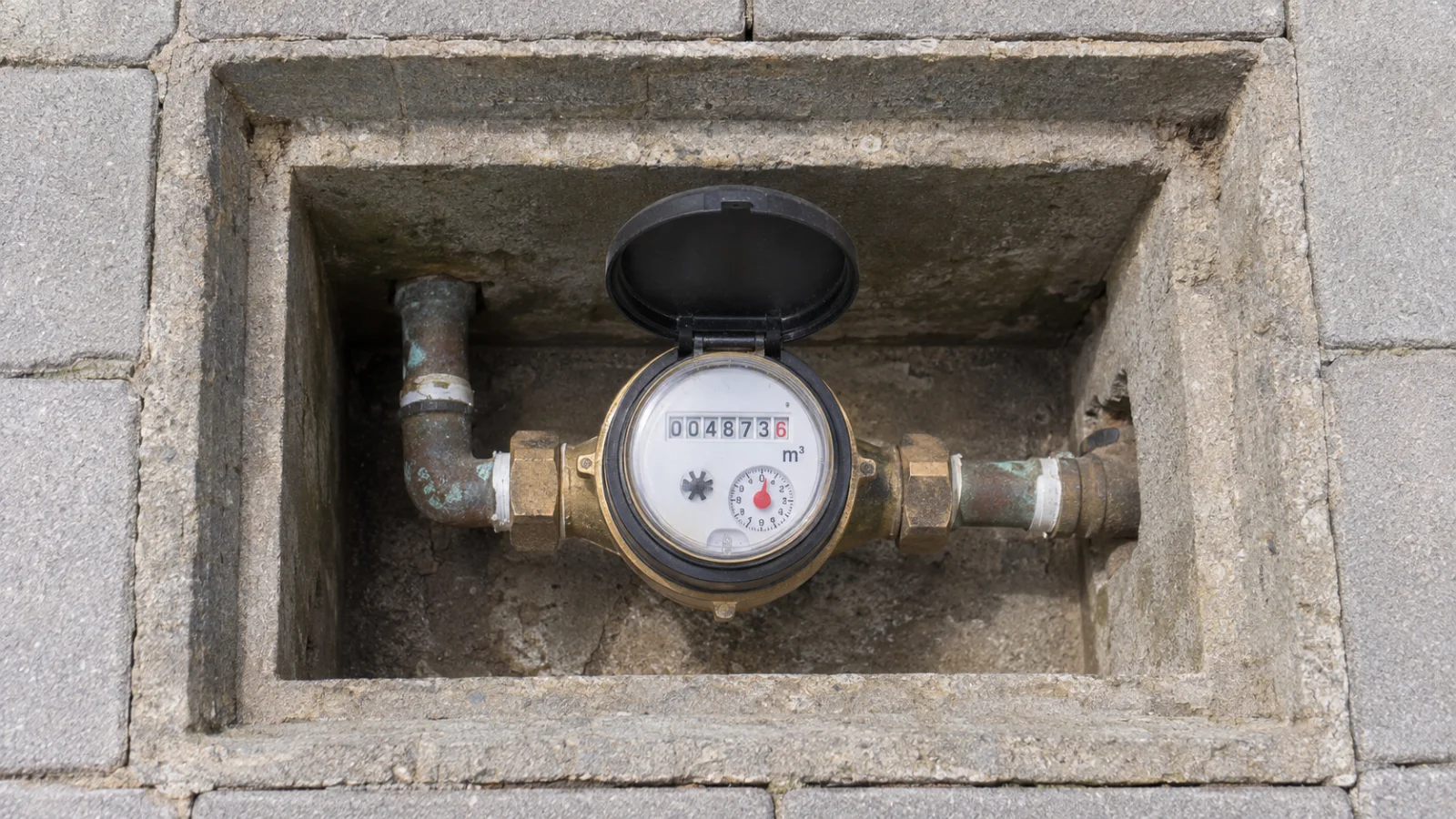
Johannesburg water tariffs rose 12.5 percent on 1 July 2026 and sanitation rose 11 percent. A household using 20 kilolitres a month on a conventional meter now pays R555.13 for the water itself, and roughly R1,437 once the fixed levy and sanitation are added. Here is the full tariff table and how the bill is built.
Most people have no idea what water costs them, because it arrives as one line on a municipal account alongside rates, refuse and electricity. This breaks it down.
The 2026/27 Johannesburg water tariff
Johannesburg charges a stepped tariff. The more you use, the more each additional kilolitre costs. The first 6 kilolitres are free.
| Monthly usage | Conventional meter, per kilolitre | Prepayment meter, per kilolitre |
|---|---|---|
| 0 to 6 kilolitres | Free | Free |
| Over 6 to 10 | R33.57 | R28.91 |
| Over 10 to 15 | R35.04 | R29.84 |
| Over 15 to 20 | R49.13 | R35.65 |
| Over 20 to 30 | R67.91 | R64.53 |
| Over 30 to 40 | R74.26 | R69.45 |
| Over 40 to 50 | R93.69 | R86.81 |
| Over 50 | R100.40 | R94.92 |
Rates from the City of Johannesburg approved water tariffs for 2026/27, effective 1 July 2026. The increases were confirmed by the City's finance department: water up 12.5 percent, sanitation up 11 percent.
One caveat worth stating. The City's summary sheet does not make the VAT treatment explicit, and at least one home services firm describes the prepayment rates as VAT-exclusive. Confirm with the City before treating these as final inclusive figures.
The charges that are not per kilolitre
This is where the bill gets bigger than people expect. Two fixed charges apply regardless of how much water you use.
| Charge | Amount per month |
|---|---|
| Residential water demand management levy | R107.74 |
| Sanitation, erf up to 300 square metres | R397.85 |
| Sanitation, erf 300 to 1,000 square metres | R774.48 |
| Sanitation, erf 1,000 to 2,000 square metres | R1,171.62 |
| Sanitation, erf over 2,000 square metres | R1,688.12 |
Note what that means: sanitation is charged on the size of your property, not on how much water you use. A household on a 1,500 square metre erf pays R1,171.62 a month for sanitation whether they use 5 kilolitres or 50.
A worked example
A household using 20 kilolitres a month on a conventional meter, on an erf between 300 and 1,000 square metres:
| Component | Amount |
|---|---|
| Water, 20 kilolitres through the stepped bands | R555.13 |
| Water demand management levy | R107.74 |
| Sanitation | R774.48 |
| Total | R1,437.35 |
The water itself is 39 percent of that bill. The fixed charges are 61 percent.
That ratio is the single most useful thing to know about your water account, because it tells you how much saving water can actually save you. Cutting consumption from 20 kilolitres to 15 saves about R245 a month. It does not touch the other R882.
Work out your own figure, for your usage and erf size, with our water cost calculator.
How the stepped bands bite
The jump between bands is where bills get away from people.
| Monthly usage | Water cost, conventional meter |
|---|---|
| 10 kilolitres | R134.28 |
| 15 kilolitres | R309.48 |
| 20 kilolitres | R555.13 |
| 25 kilolitres | R894.68 |
Our calculations from the tariff table above. Going from 10 to 20 kilolitres roughly quadruples the water portion of your bill, because the rate per kilolitre climbs from R33.57 to R49.13 across those bands.
A leaking toilet can use several hundred litres a day. On a stepped tariff, that leak is charged at your highest band rate, not your average one.
What is happening elsewhere
| Municipality | 2026/27 water increase |
|---|---|
| Johannesburg | 12.5 percent |
| Tshwane | 10 percent, with sanitation up 5 percent |
Tshwane figures from the City of Tshwane. Cape Town's Step 1 rate for 2026/27 is listed at R21.78 per kilolitre excluding VAT, rising to R95.63 excluding VAT for usage above 35 kilolitres, per the City of Cape Town's 2026/27 budget annexure. The City's own consumer guide gives a slightly different Step 1 figure including VAT, so verify against the annexure before relying on a single number.
Bulk costs are driving this. Rand Water proposed a 10 percent bulk increase for 2026/27, following 14.3 percent implemented on 1 July 2025.
Why bills keep rising faster than inflation
Nearly half the water that municipalities buy never reaches a paying customer. National non-revenue water is 47.3 percent. eThekwini was at 65 percent in June 2026 and Nelson Mandela Bay at 57.62 percent in 2024/25.
Paying customers cover the losses. That is the structural reason water tariffs rise above inflation year after year, and it will continue until the leaks are fixed.
The National Water Action Plan, released on 23 July 2026, identifies the root cause as an inappropriate delivery model for water services, including the absence of ring-fencing of water revenue. In Johannesburg, that showed up concretely when the City withdrew R3.4 billion from Johannesburg Water on 30 June 2026.
On the question of whether Gauteng faces a Day Zero, the provincial government said in February 2026 that it is incorrect to suggest there will be one, per The Citizen, pointing to infrastructure failures, leaks and high consumption instead. Worth remembering when you see the phrase used in marketing.
Frequently asked questions
How much does water cost in Johannesburg in 2026?
On a conventional meter the first 6 kilolitres are free, then R33.57 per kilolitre up to 10 kilolitres, rising through bands to R100.40 per kilolitre above 50 kilolitres. Tariffs rose 12.5 percent on 1 July 2026.
What is a typical monthly water bill in Johannesburg?
A household using 20 kilolitres on an erf of 300 to 1,000 square metres pays about R1,437 a month: R555.13 for water, R107.74 for the demand management levy and R774.48 for sanitation.
Why is my sanitation charge so high?
In Johannesburg, sanitation is charged on the size of your erf, not on how much water you use. It ranges from R397.85 a month for erven up to 300 square metres to R1,688.12 for erven over 2,000 square metres.
How much can I save by using less water?
Less than most people expect, because fixed charges dominate. For a typical 20 kilolitre household, water is about 39 percent of the bill and fixed charges are 61 percent. Cutting from 20 to 15 kilolitres saves roughly R245 a month.
Why do water tariffs rise faster than inflation?
Because nearly half the water municipalities buy never reaches a paying customer. National non-revenue water is 47.3 percent, and paying customers cover those losses through higher tariffs.