Water Tank Prices in South Africa 2026: What Backup Really Costs
By EV Cost Calculator Team · Published · Last updated
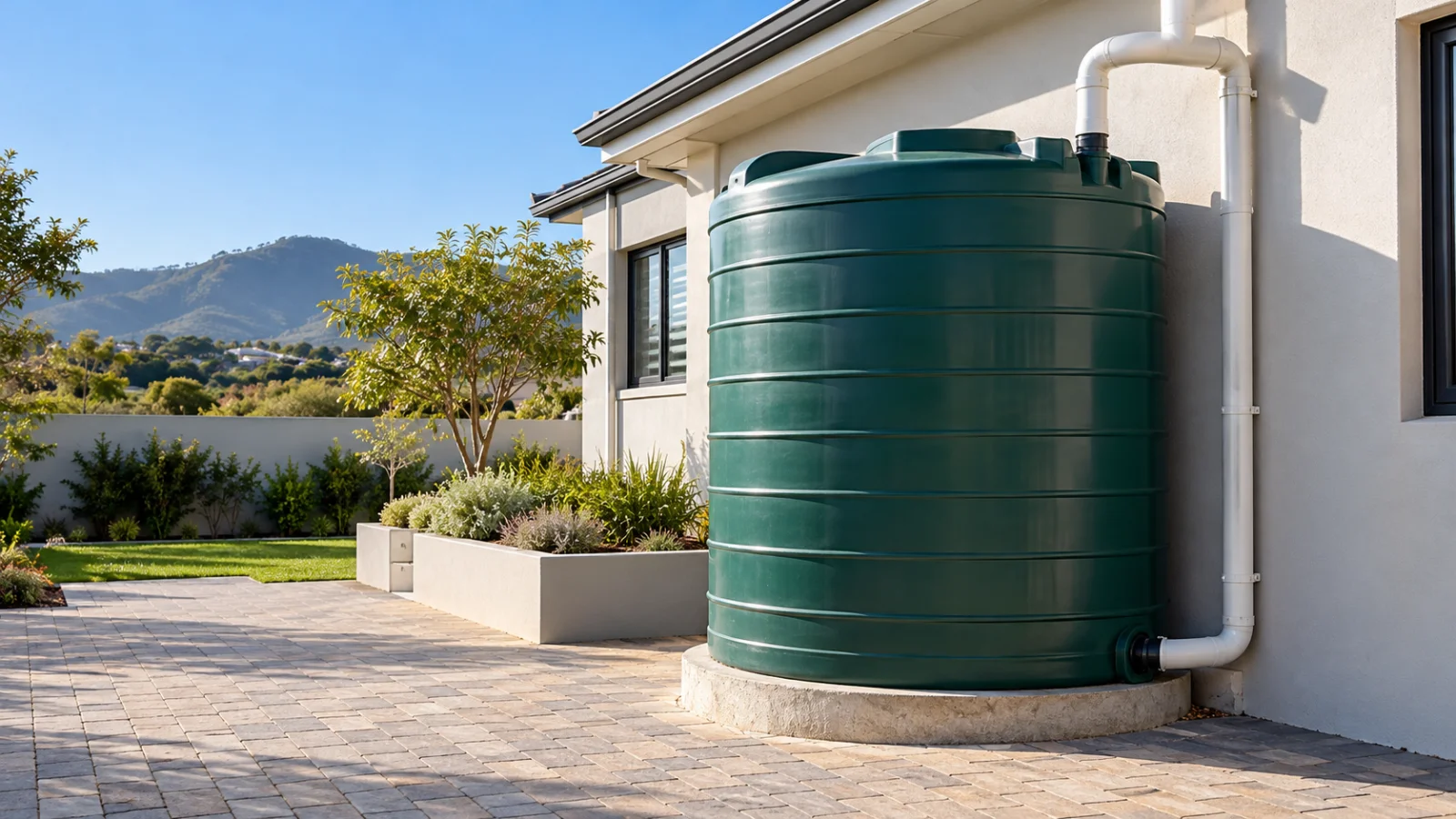
A 2,500 litre JoJo tank costs between R4,140 and R5,150 at South African retailers right now. A 10,000 litre tank costs about R18,830. Installers quote complete pressurised backup systems at R20,000 to R40,000. Here is what you actually need, and how to avoid paying four times the going rate per litre.
Water backup is where solar was in 2021: a handful of early adopters, no standard pricing, and a lot of confident advice from people selling things. The prices below are from retailer listings, each one linked.
Why people are buying
Johannesburg had at least 22 major water outages between 31 December 2025 and mid-January 2026, according to Daily Maverick. That report also notes that large sections of the network were built 80 years ago, and that 20,915 leaks and pipe bursts were logged between 1 July and 15 December 2025.
The maintenance position is not improving quickly. Daily Maverick reported that only 55 of 98 Johannesburg reservoirs were in good working order, with 43 structurally leaking, and repairs costed at over R1.25 billion. Daily Maverick reported that the City withdrew R3.4 billion from Johannesburg Water on 30 June 2026, leaving a zero balance. IOL cites an infrastructure renewal backlog of R26.61 billion, with one in five assets having less than 10 years of useful life left.
Elsewhere the losses are worse. eThekwini was losing 65 percent of its water in June 2026, per IOL. Nelson Mandela Bay lost 57.62 percent in 2024/25, per The Herald.
Tank prices, October 2026
The single most useful thing to understand before you buy: shape costs more than size.
| Size and shape | Price | Retailer |
|---|---|---|
| 1,000 litre slimline | R2,199 | Leroy Merlin |
| 1,500 litre vertical | R2,353.66 | Plumblink |
| 2,700 litre vertical | R4,139.69 | Buco |
| 2,500 litre vertical | R4,425.20 | Seal Watertech |
| 2,500 litre vertical | R5,149 | Leroy Merlin |
| 2,500 litre slimline | R13,375 | Leroy Merlin |
| 2,500 litre horizontal | R13,499 | Buco |
| 5,000 litre vertical | R5,500 | DIY Shop |
| 5,250 litre vertical | R6,300 | Mercury Build It |
| 5,000 litre horizontal | R20,747.26 | Plumblink |
| 10,000 litre vertical | R18,830.79 | Buco |
Listings at Buco, Leroy Merlin, Plumblink, Seal Watertech, DIY Shop and Mercury Build It, all seen in October 2026.
Look at the 2,500 litre rows. The vertical costs R4,140. The slimline costs R13,375. That is more than three times the price for the same water, because slim and horizontal shapes are harder to mould and are sold on the basis that they fit down the side of a house.
Now look at the 5,000 litre vertical at R5,500 against the 2,500 litre vertical at R4,425. You double the storage for about 24 percent more money. If you have the space, going bigger is almost always the better buy.
Best value in the table: the 5,000 litre vertical at R1.10 per litre. Worst: the 2,500 litre slimline at R5.35 per litre.
What size do you actually need?
Work backwards from how long you want to last and what you are protecting.
| Purpose | Rough daily need, family of four | Tank size for 3 days |
|---|---|---|
| Drinking and cooking only | About 20 to 40 litres | 200 litres is plenty |
| Drinking, cooking, basic washing and toilets | About 200 to 300 litres | 1,000 litres |
| Near-normal household use | About 600 to 800 litres | 2,500 litres |
| Normal use including garden | Over 1,000 litres | 5,000 litres and up |
These are planning estimates based on typical household consumption patterns rather than measured South African survey data, so treat them as a starting point. Your own metered usage is the better guide, and you can work that out with our water cost calculator.
Most households overestimate what they need for an outage and underestimate what they use normally. Three days of drinking water for four people fits in a 200 litre drum. Three days of showers does not.
Gravity versus pressurised
A gravity-fed tank is the cheap option. Tank on a stand, gravity feeds a tap or a garden line. It works during a power cut. It will not run your geyser or give you a usable shower unless the tank is high enough, and the water pressure will be noticeably weak.
A pressurised backup system adds a pump, a pressure vessel and a changeover arrangement so the house switches to the tank automatically when the mains fail and refills the tank when supply returns. You keep normal pressure throughout the house. It needs electricity, which is worth thinking about if your area loses power and water at the same time.
On cost, we could not find an independent price survey. Installer quotes circulating in the market run R20,000 to R40,000 for a complete system including tank, base, fittings, pressure pump and labour, rising to around R55,000 for a whole-house set-up. Those are installer ranges rather than audited prices, so get at least two written quotes and ask what is excluded.
Three things to sort out before you buy
The stand. A full 2,500 litre tank weighs about 2.5 tonnes. That load needs a proper base or stand. We could not verify current stand prices, so get it quoted separately rather than assuming it is included.
Your insurer. Broker Indwe Risk Services notes that water disruption is not automatically covered and advises declaring tanks, pumps and boreholes. OUTsurance covers water damage when it is sudden and unforeseen, with gradual damage from poor maintenance often excluded. A phone call now is cheaper than an argument later.
What goes into the tank. A tank filled from contaminated mains holds contaminated water. Supply backup and drinking water safety are separate problems, and a tank only solves the first.
Is this the next solar?
The comparison gets made a lot, and the honest answer is: maybe, but the evidence is still thin.
The solar precedent is real enough. Rooftop solar in South Africa went from roughly 2,264 MW in July 2022 to over 8 GW by June 2026, per Engineering News and Moneyweb, with the steepest growth during the worst load shedding.
For water, The Citizen reported that tanks, boreholes and backup pumps could become the next solar panels of the property market, with one estate agency seeing signs of the same transition. But the same article notes the market is not yet consistent enough to put a percentage premium on properties with backup water.
So treat claims that boreholes are being drilled at solar-boom pace as marketing until someone publishes sales data. The infrastructure case for backup is strong on its own without the analogy.
Frequently asked questions
How much does a 2,500 litre water tank cost in South Africa?
Between R4,139.69 and R5,149 for a vertical tank at major retailers in October 2026. The same capacity in a slimline shape costs around R13,375, roughly three times more.
What size water tank do I need for my house?
For drinking and cooking only, 200 litres covers a family of four for about three days. For basic washing and toilets as well, plan on 1,000 litres. For near-normal household use, 2,500 litres and up.
Is a bigger water tank better value?
Almost always, if you have the space. A 5,000 litre vertical tank at R5,500 costs about 24 percent more than a 2,500 litre vertical at R4,425 and holds twice as much, which works out to R1.10 per litre against R1.77.
How much does a water backup system cost installed?
Installers quote R20,000 to R40,000 for a complete pressurised system including tank, base, fittings, pump and labour, and around R55,000 for a whole-house set-up. These are installer ranges, so get at least two written quotes.
Does home insurance cover a water tank?
Not automatically. Brokers advise declaring tanks, pumps and boreholes to your insurer. Water damage is typically covered when sudden and unforeseen, while gradual damage from poor maintenance is often excluded.